
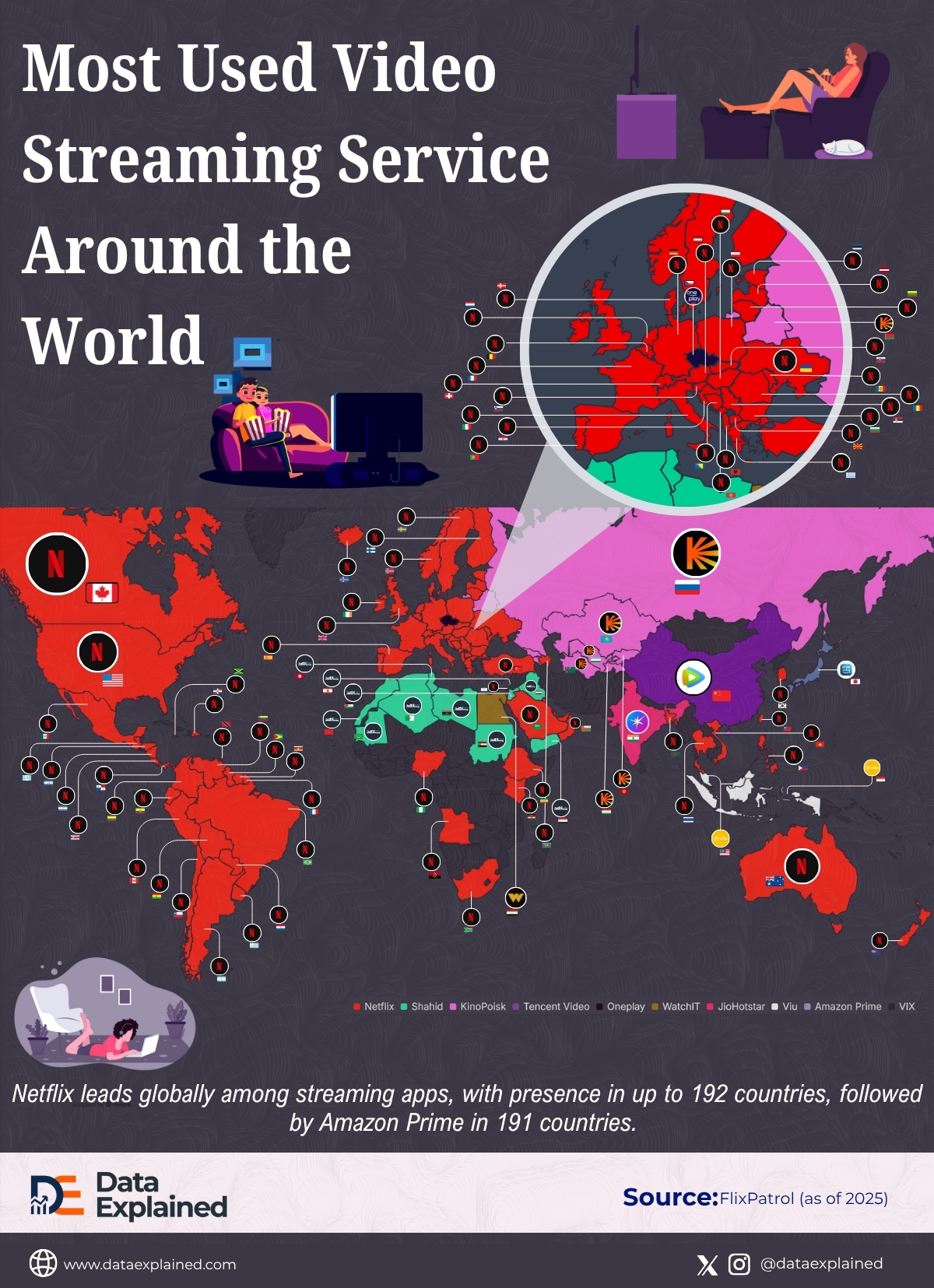
The habits of video streaming vary widely around the world, with several countries favoring different platforms for movies, shows, and live content.
This map above uses FlixPatrol data to show the saturation of video streaming services across regions worldwide.
Looking at the most popular video streaming service by country shows how culture, pricing, and local content shape what people watch and where they watch it.
TL;DR
- According to the data, Netflix leads globally among streaming apps, with a presence in over 190 countries.
- Sports and regional content help streaming platforms attract and retain subscribers, as viewers tend to prefer services that reflect their interests and culture.
| wdt_ID | wdt_created_by | wdt_created_at | wdt_last_edited_by | wdt_last_edited_at | Rank | Streaming app | Countries available |
|---|---|---|---|---|---|---|---|
| 1 | Monica Ebunoluwa | 20/05/2026 09:55 AM | Monica Ebunoluwa | 20/05/2026 09:55 AM | 1 | Netflix | 192 |
| 2 | Monica Ebunoluwa | 20/05/2026 09:55 AM | Monica Ebunoluwa | 20/05/2026 09:55 AM | 2 | Amazon Prime Video | 191 |
| 3 | Monica Ebunoluwa | 20/05/2026 09:55 AM | Monica Ebunoluwa | 20/05/2026 09:55 AM | 3 | MUBI | 191 |
| 4 | Monica Ebunoluwa | 20/05/2026 09:55 AM | Monica Ebunoluwa | 20/05/2026 09:55 AM | 4 | Google TV | 112 |
| 5 | Monica Ebunoluwa | 20/05/2026 09:55 AM | Monica Ebunoluwa | 20/05/2026 09:55 AM | 5 | Apple TV Store | 102 |
| 6 | Monica Ebunoluwa | 20/05/2026 09:55 AM | Monica Ebunoluwa | 20/05/2026 09:55 AM | 6 | Apple TV | 102 |
| 7 | Monica Ebunoluwa | 20/05/2026 09:55 AM | Monica Ebunoluwa | 20/05/2026 09:55 AM | 7 | Disney+ | 58 |
| 8 | Monica Ebunoluwa | 20/05/2026 09:55 AM | Monica Ebunoluwa | 20/05/2026 09:55 AM | 8 | Crunchyroll | 54 |
| 9 | Monica Ebunoluwa | 20/05/2026 09:55 AM | Monica Ebunoluwa | 20/05/2026 09:55 AM | 9 | Paramount+ | 47 |
| 10 | Monica Ebunoluwa | 20/05/2026 09:55 AM | Monica Ebunoluwa | 20/05/2026 09:55 AM | 10 | HBO Max | 44 |
Netflix Leads Broadly
Netflix leads globally thanks to its availability worldwide and its presence in more countries than most streaming competitors.
By rapidly expanding into global markets, Netflix built strong brand recognition and earned users’ trust before other platforms launched globally.
Netflix offers an expansive content library, including movies, series, documentaries, and other locally produced shows for different regions.
Local Language Content Matters
Regional streaming services largely dominate because they focus on local-language content and culturally relevant shows that resonate with viewers.
Audiences often prefer platforms that reflect their day-to-day experiences, traditions, and entertainment preferences.
Licensing can also play a significant role.
Regional services often have exclusive rights to local movies, TV shows, and sports, offering content that many global platforms cannot access.
This helps them not only to attract but also to retain local audiences.
Pricing and internet access can further influence popularity.
Regional platforms most often offer low subscription fees for local incomes and improve streaming quality for areas with limited broadband.
This can make them more accessible and convenient for the audience.
Upcoming Challengers
The streaming market is becoming more competitive as big companies seek rapid growth, primarily through mergers and acquisitions.
There has been industry speculation that Netflix will partner with major studios like Paramount, giving it access to more popular movies and TV shows, as well as long-running franchises.
This could strengthen Netflix’s position but also bring concerns of competition.
At the same time, other platforms are rising as challengers by building strong content libraries and expanding globally.
Services supported by traditional media companies and tech firms are investing more in exclusive content, sports rights, and regional programming.
This trend shows that while Netflix still leads, the race for viewers is increasing as competitors look for new ways to improve and stand out.
YouTube’s Strong Usage Survey Indicators
Even though it isn’t an SVOD platform like Netflix or Disney+, YouTube is still one of the most widely used video services worldwide.
This is a result of its massive free user base and diverse content.
Ampere Analysis research shows that YouTube reaches 84% of global internet users each month, with 38% of its monthly active users watching traditional TV and film content on the platform.
NOTE: The “84%” figure is not a universal consensus but specific to Ampere Analysis research methodology.
This shows that many people use it more like a streaming service.
Another Ofcom report shows that YouTube is the default video destination for many viewers, with surveys reporting higher daily engagement than other subscription services.
This expansion and frequent use enhance YouTube’s influence on global video consumption, even without subscription revenue dominating its model as in SVOD competitors.
The same dynamic plays out across other digital platforms. AI tools in the US follow a similarly concentrated pattern, with a handful of platforms capturing the vast majority of adoption.
ELI5
Netflix leads globally, as it is available in many countries and offers a wide range of content for audiences.
Sports and regional shows also drive subscriptions across streaming platforms, as people tend to subscribe to services that align with their interests and culture.
Meanwhile, YouTube remains one of the world’s most-used video platforms, despite relying primarily on ads and free access rather than subscriptions.
Source:
FlixPatrol | Ampere Analysis | Adwave | Ofcom