Considering that the United States co-hosted the 2026 FIFA World Cup, survey data points to a clear generational divide in enthusiasm for football’s biggest tournament.
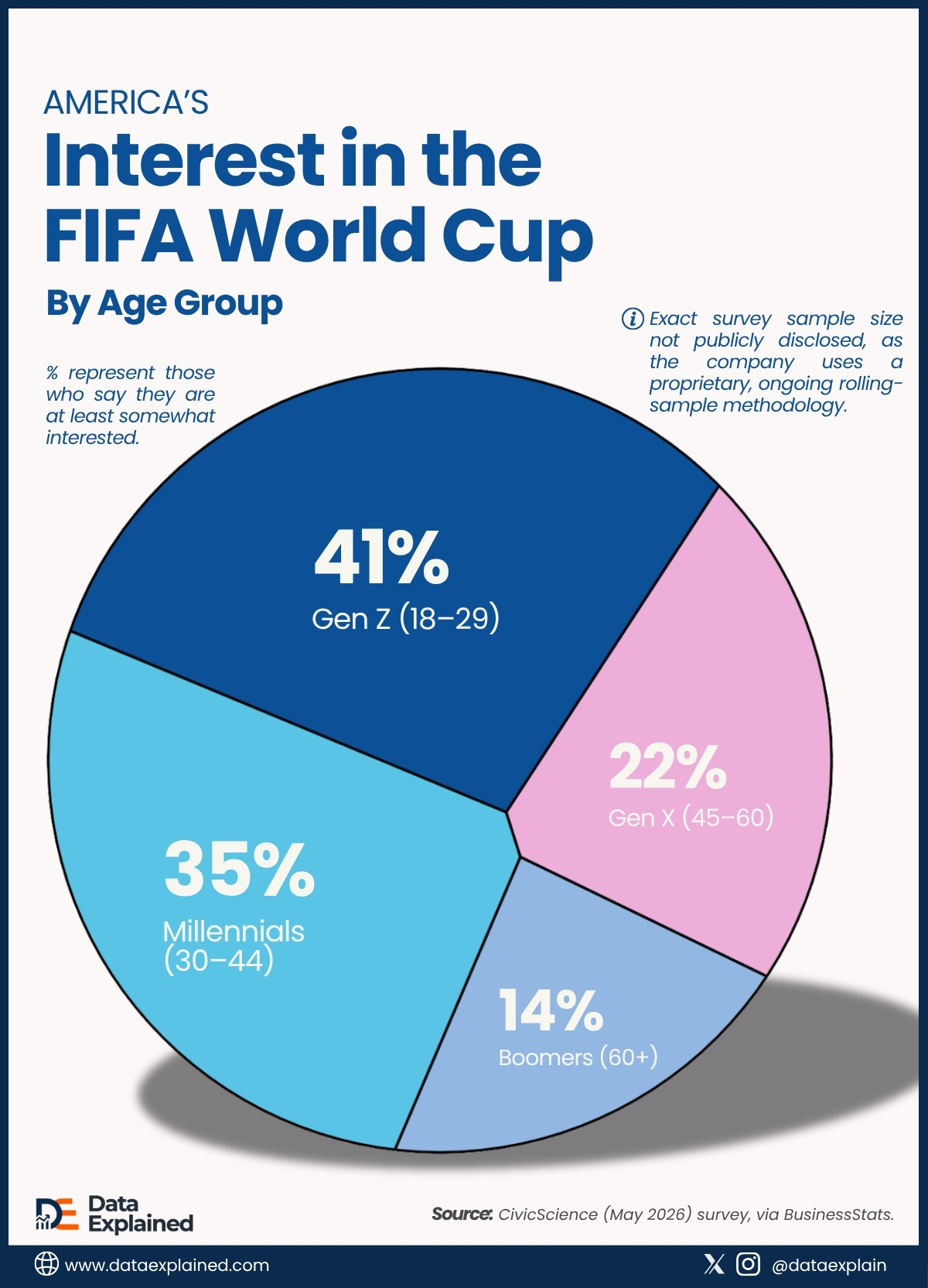
According to a May 2026 survey by CivicScience, obtained via BusinessStats, 41% of Gen Z U.S. adults aged 18 to 29 say they are at least somewhat interested in the World Cup.
That figure declines across older generations, dropping to 35% among Millennials, 22% among Generation X, and just 14% among Baby Boomers.
In other words, the older the generation, the lower the level of interest.
TL;DR
- Gen Z is the most interested generation in the 2026 FIFA World Cup, with 41% expressing at least some interest.
- Interest declines steadily with each older age group, dropping to just 14% among Baby Boomers.
- The data suggests the World Cup’s biggest growth opportunity in the U.S. lies with younger audiences.
ALSO READ: Group Stage of 2026 World Cup Produces Most Goals Per Game Since 1958
A Clear Generational Divide
| wdt_ID | wdt_created_by | wdt_created_at | wdt_last_edited_by | wdt_last_edited_at | Age Group | Interested (%) |
|---|---|---|---|---|---|---|
| 1 | emmanuel-ashemiriogwa | 11/07/2026 02:05 PM | emmanuel-ashemiriogwa | 11/07/2026 02:05 PM | Gen Z (18–29) | 41 |
| 2 | emmanuel-ashemiriogwa | 11/07/2026 02:05 PM | emmanuel-ashemiriogwa | 11/07/2026 02:05 PM | Millennials (30–44) | 35 |
| 3 | emmanuel-ashemiriogwa | 11/07/2026 02:05 PM | emmanuel-ashemiriogwa | 11/07/2026 02:05 PM | Gen X (45–60) | 22 |
| 4 | emmanuel-ashemiriogwa | 11/07/2026 02:05 PM | emmanuel-ashemiriogwa | 11/07/2026 02:05 PM | Boomers (60+) | 14 |
The most striking feature of the survey is not simply that Gen Z tops the list, but also how neatly interest declines across generations.
Gen Z leads with 41%, followed by Millennials at 35%. Among Generation X, interest drops sharply to 22%, before falling again to 14% among Boomers.
There are no reversals or unexpected spikes. Every older generation reports lower interest than the one before it.
That makes age one of the clearest indicators of World Cup interest in the survey.
The biggest shift occurs between Millennials and Generation X, where interest falls by 13 percentage points.
While Millennials remain relatively engaged, enthusiasm drops considerably among Americans aged 45 and older.
Young Fans are Driving Football’s Growth
Younger Americans have grown up during a period when global football has become significantly more accessible.
European club competitions are widely broadcast, Major League Soccer has expanded, streaming platforms have increased access to international matches, and football content has become commonplace across social media.
Many younger fans have also engaged with the sport through video games such as EA Sports FC.
That helps to introduce international clubs and players to audiences who may not have grown up watching the World Cup.
While the survey does not explain why respondents are interested, the age pattern aligns with the changing way younger Americans consume sport and entertainment.
ALSO READ: FIFA’s 2026 World Cup Generates $6.2 Billion in Commercial Deals
The Opportunity and Challenge
Although Gen Z records the highest level of interest, another statistic deserves attention.
Even among the youngest adults surveyed, only 41% say they are at least somewhat interested in the World Cup.
In other words, a majority of Gen Z respondents remain unengaged with the tournament.
That suggests football still has room to grow in the United States, despite the country’s role as one of the hosts of the 2026 competition.
The survey therefore presents both an opportunity and a challenge.
So, What?
The survey does not measure television viewership, ticket sales or attendance. Nor does it predict how many people will ultimately watch the tournament once it begins.
Instead, it measures public interest before the kick-off happened.
Even so, the findings offer an early indication of where the World Cup’s momentum is strongest.
Rather than attracting equal enthusiasm across all age groups, the tournament appears to resonate most with younger Americans.
That has important implications for advertisers, broadcasters and FIFA itself as it looks to strengthen football’s position in one of the world’s largest sports markets.
ALSO READ: FIFA Has Banned 12 Countries From the World Cup Since 1950
ELI5
The survey asked Americans how interested they are in the 2026 FIFA World Cup. Younger people liked it much more than older people.
About four in ten Gen Z adults said they were interested, but that number kept shrinking with each older generation.
The results suggest football’s future fan base in the U.S. is likely to be driven by younger people.
Source:
CivicScience (May 2026) survey, obtained via BusinessStats.